
Home > Solution > Cutting Gas Generator > High Purity Nitrogen Cutting
Moldel: BCE25/50
Solution for cutting stainless steel by producing 99.99% nitrogen on site
Cutting Material: best for stainless steel
Best Performance for Cutting Thickness: upto 16mm
Max Nitrogen Generation Capacity: 600m³/24h , 1200m³/24h
Highlights
1.Why is 99.99% nitrogen needed for laser cutting?
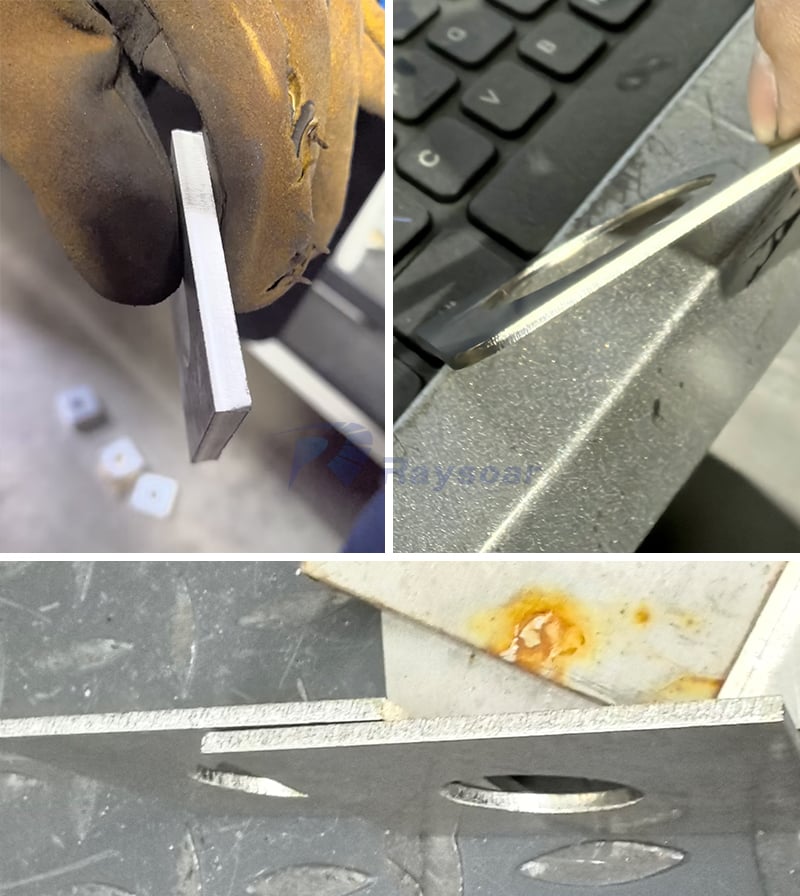
During laser cutting, oxygen in the air oxidizes the cut edge of stainless steel, causing discoloration. High-purity nitrogen shields the molten metal at the cutting zone, producing bright, oxidation-free edges with no secondary cleaning required.
2.Which laser machines is it compatible with?
3.What materials and thicknesses can it handle?
6. How does it compare with cylinder gas or liquid nitrogen?
No cylinder rental costs, no delivery waiting time, no purity doubts, and no dependency on gas suppliers. You control the production, the purity and the cost — on-site, on demand.
7. What does the complete system include?
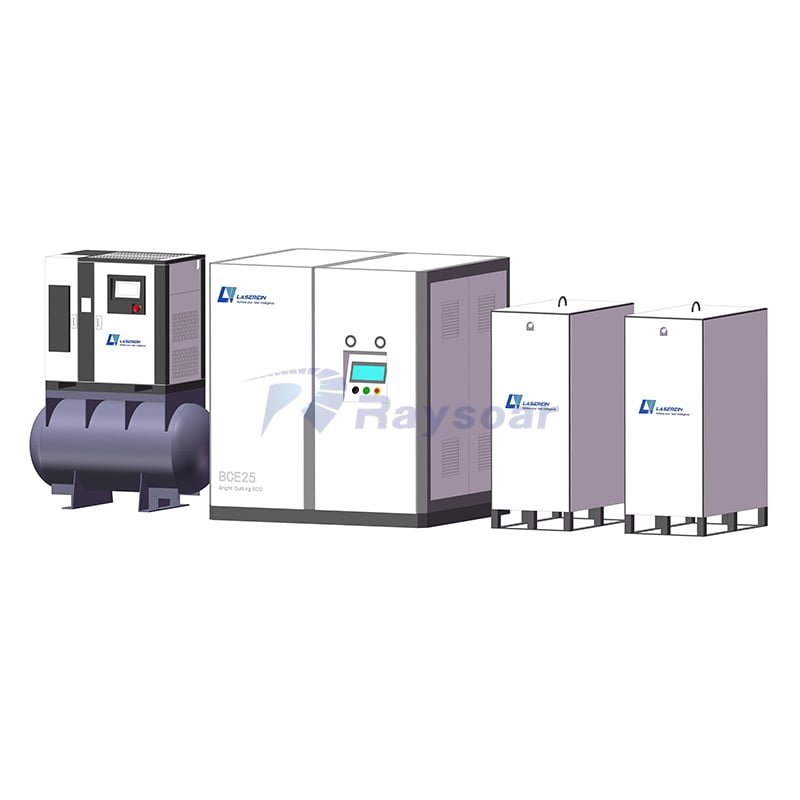
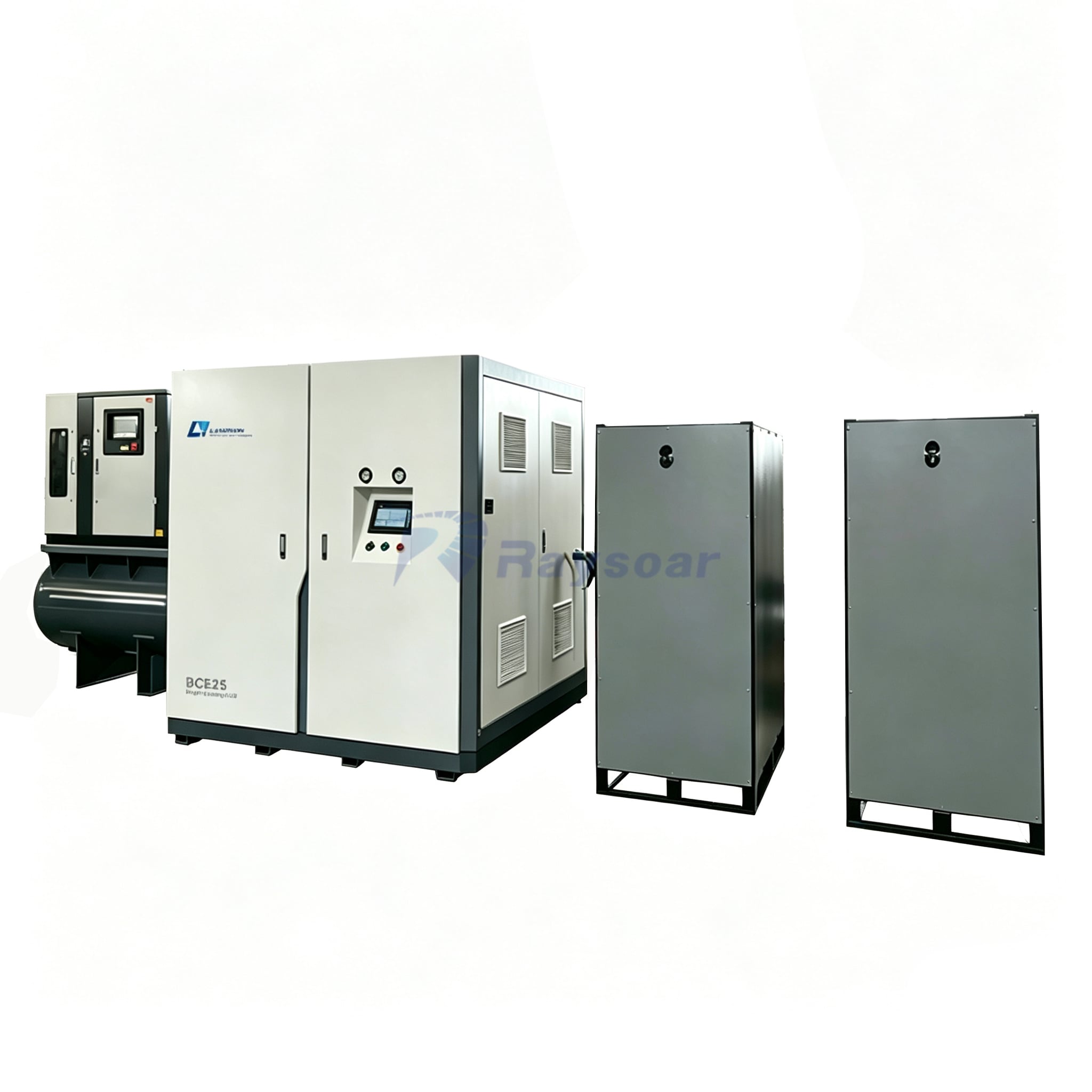
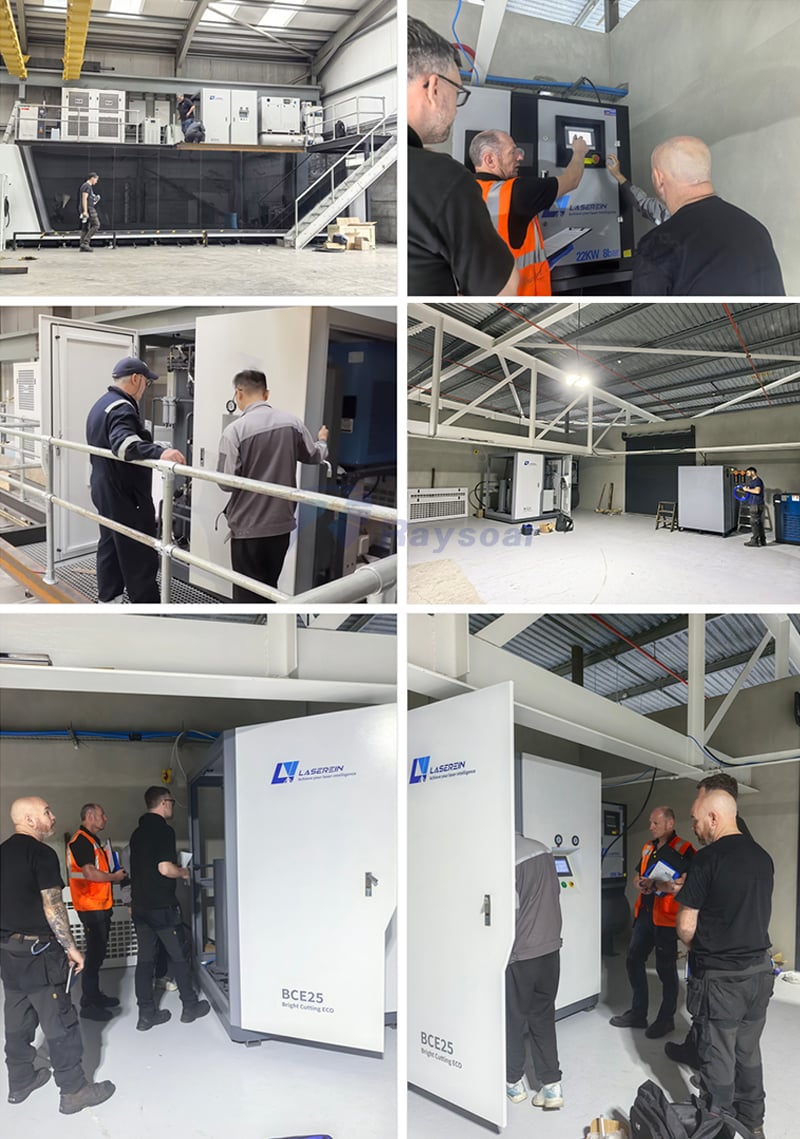
A compressor, a nitrogen generating cabinet compacted with a booster, and a high-pressure cylinder bundle for filling and storage — a complete on-site generation and filling solution.
8. What warranty and after-sales support do you offer?
Compressed air goes in, nitrogen comes out, and the cabinet does the separating in between. An on-site nitrogen generator sits beside the compressor, takes the air it makes, and delivers nitrogen at the purity the cutting head needs. A booster lifts that gas into the cylinder bundle, so the workshop draws from cylinders refilled on the spot instead of from a truck. Nothing in the cutting process changes: same nozzle, same program, same assist pressure. Only the source of the gas does.
On stainless, oxygen in the assist gas is what turns an edge yellow-brown, because the edge oxidizes before it cools. Nitrogen pushes the melt out without feeding that reaction, so a clean edge leaves the table and usually goes straight on to the next step. On an on-site nitrogen generator, purity is worth reading at the outlet rather than trusting a certificate on the wall, which is the reason the display on the cabinet earns its place.
Four answers decide the size: the laser power on your floor (this series is aimed at 3–12kW machines), the hours that head actually cuts, the thickness mix you cut most often (stainless up to 16mm is what the package is set up for), and your peak and off-peak electricity windows. Send those four and the recommendation has something to stand on.
Mild steel and aluminum are a separate question. They cut with oxygen, or with nitrogen at a lower purity, and the answer there is a different configuration rather than a bigger on-site nitrogen generator. Tell us the material mix at the start and the solution is quoted once.
The cylinders are what make the tariff work for an on-site nitrogen generator. Fill inside the cheap window, cut through the expensive one, and the meter runs when the rate is low. That decouples production from the fill: a busy morning does not put the compressor on peak-price power, and a quiet night does not throw capacity away. Build the shift plan around that pattern from day one.
Picture one line along a wall: compressor, air treatment, cabinet, cylinder bundle. An on-site nitrogen generator wants to sit close to the compressor so the air run stays short, and close to the cutting cell so the gas holds its pressure. It also wants what laser shops rarely have spare: floor with air moving around it, away from the dust near a cutting table, and a drain that works, because the cabinet sheds water all day. If the cylinder pack has to stand outside, say so early — the layout drawing and the piping both change.
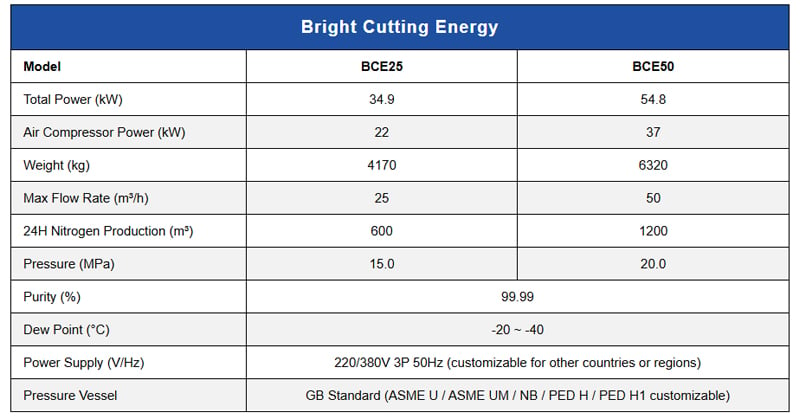
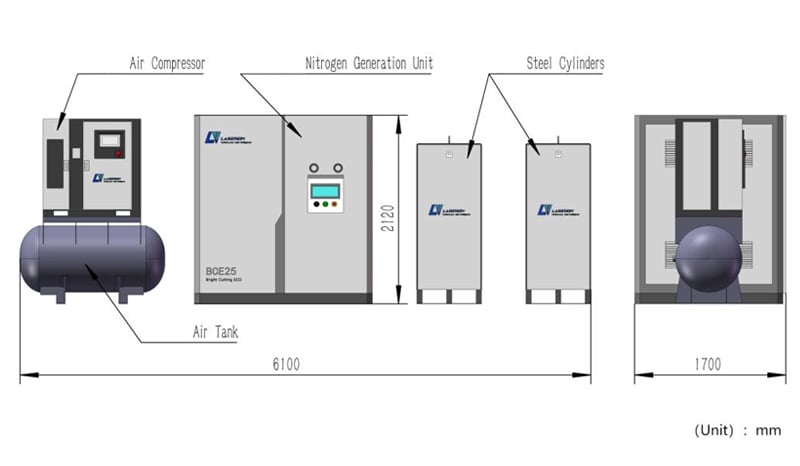
The two images above are the on-site nitrogen generator specification, and they read in a fixed order. On the parameter table, find your laser power first, then read across for the flow and purity figures of that model; those two numbers decide whether one unit covers your cutting day. On the dimension drawing, read footprint, height and service clearance, then walk the floor with a tape measure before comparing prices. If no row covers a thicker section or a second machine, send the numbers and we say which frame to step up to.
A cabinet can only separate what it is given. Oil, water and dust arriving with the compressed air do not vanish at the outlet — they shorten the life of the separation material and show up as purity that will not hold. That is why the dryer and filters ahead of the cabinet belong to the system and not to the accessories: a saturated dryer is the most common reason a working on-site nitrogen generator starts reading low.
The comparison that matters is not purity — all three can deliver it — but what an on-site nitrogen generator asks of your workshop against what a supplier asks of it.
| Item | On-site generation | Cylinder gas | Liquid nitrogen |
|---|---|---|---|
| Supply | Made on site, refilled on site | Depends on delivery schedule | Depends on delivery schedule |
| Purity control | Read at the outlet, shift by shift | Certified at filling, then handled | Certified at filling, then stored |
| Floor space | Compressor plus cabinet plus cylinder pack | Cylinder storage and handling | Tank, plus venting and refill access |
| Day-to-day effort | Operator checks and a service routine | Ordering, receiving, changing cylinders | Ordering, receiving, tank level |
Cylinder gas and liquid nitrogen suit a shop with steady consumption and a supplier it trusts. Generation suits a shop that cuts most days, dislikes waiting for a truck, and wants the purity number in its own hands.
Shanghai Raysoar Electromechanical Equipment Co., Ltd. supplies laser cutting consumables, key components and on-site nitrogen solutions for laser equipment MRO, alongside service work on existing machines. For the BCE series, the specification drawing and the layout drawing go out first, because an on-site nitrogen generator is only as good as the room it stands in — power, air and floor space get checked before anything ships.


Copyright © 2024 by Shanghai Raysoar Electromechanical Equipment Co.,Ltd.